St Martin-in-the-Fields
Visit St Martin-in-the-Fields in London, a landmark church famed for music, history, architecture and its enduring spirit of welcome.
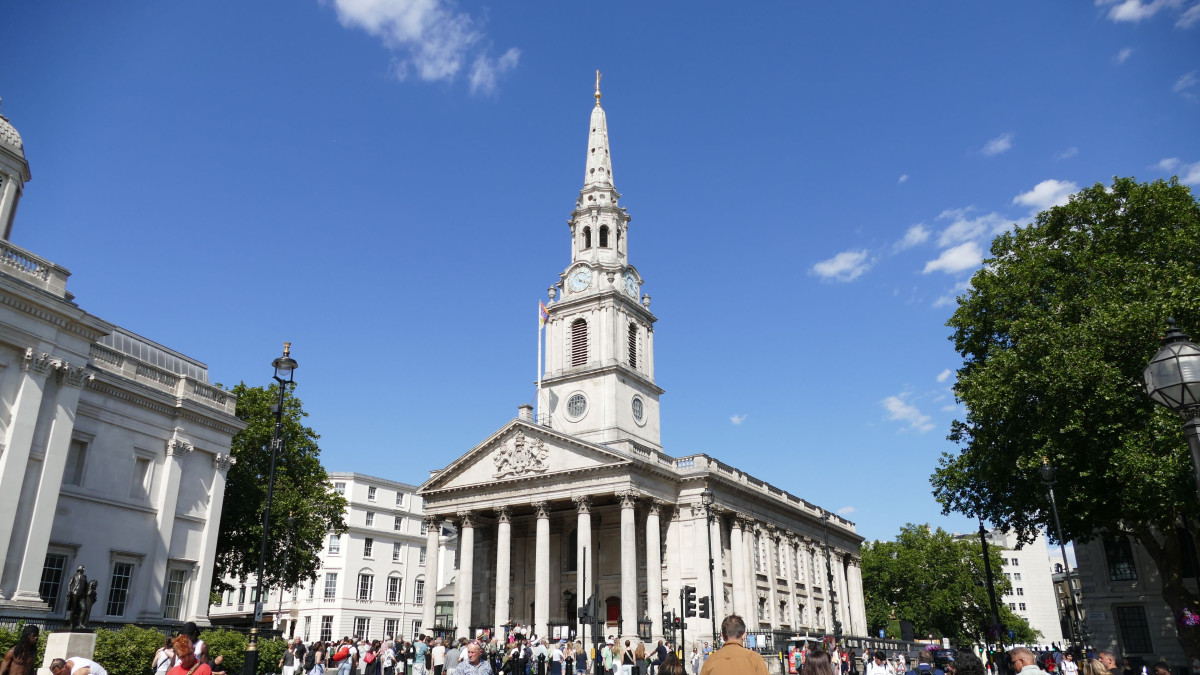
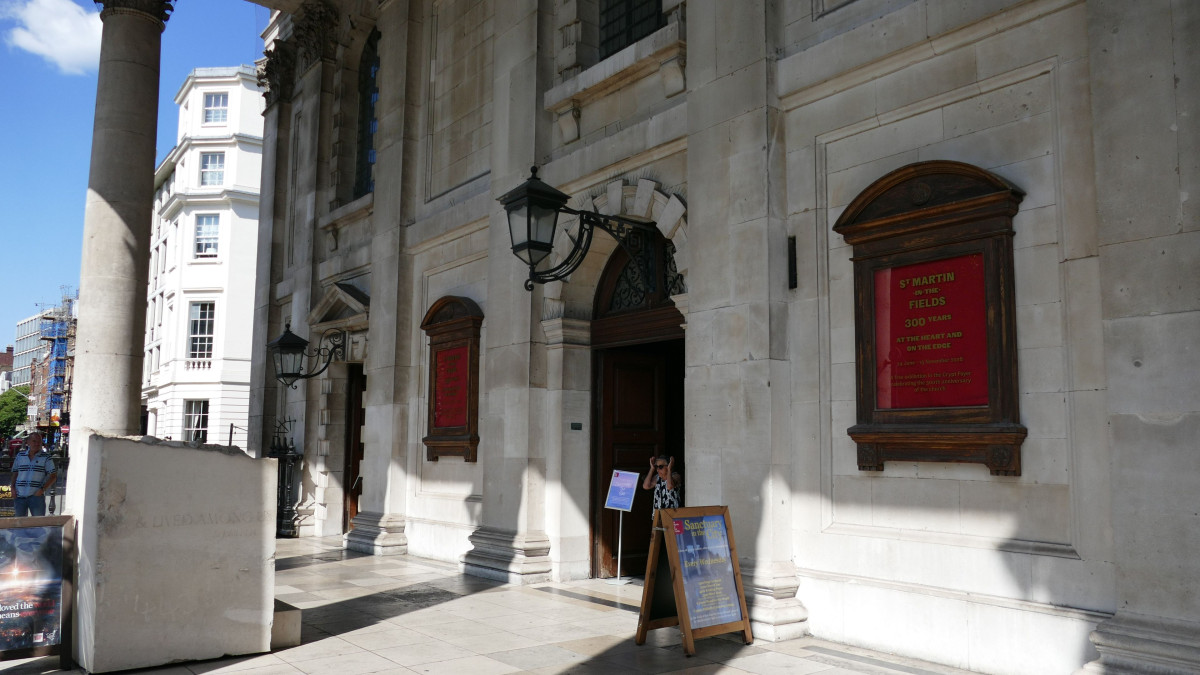



Standing at the northeast corner of Trafalgar Square, St Martin-in-the-Fields is one of London’s most recognizable churches, yet its true power lies beyond its elegant silhouette. For many visitors, the famous spire is simply part of the city’s skyline, a graceful landmark framed by buses, galleries and the restless movement of central London. Step closer, however, and the church reveals itself as something richer: a place where architecture, music, public life and compassion have met for centuries in a way that feels unmistakably alive.
The name itself reaches back to an earlier London, when this area lay beyond the dense medieval city and fields stretched where grand avenues now run. That origin gives the church a poetic quality. Even in the heart of modern Westminster, St Martin-in-the-Fields retains the sense of being a threshold space, where the formal and the human, the civic and the spiritual, meet without conflict. It is at once a parish church, a cultural institution and a sanctuary in the broadest sense of the word.
An architectural icon in the capital
The present building was designed by James Gibbs and completed in the 1720s. Its design became enormously influential, particularly in the English-speaking world, where countless churches would later echo its combination of classical portico and soaring steeple. In London, though, the original still commands attention. The Corinthian columns, the balanced proportions and the bright Portland stone create a building that feels dignified without becoming remote. It belongs naturally to Trafalgar Square, yet it also softens the monumental scale of the surrounding city.
Seen from the square, St Martin-in-the-Fields offers one of those rare London views that seem to gather several eras at once. Nelson’s Column and the National Gallery speak of empire, art and statehood; the church introduces another note, one of reflection and service. This relationship with its setting is part of its genius. It does not dominate the square so much as humanize it, reminding passersby that public space can hold more than spectacle.
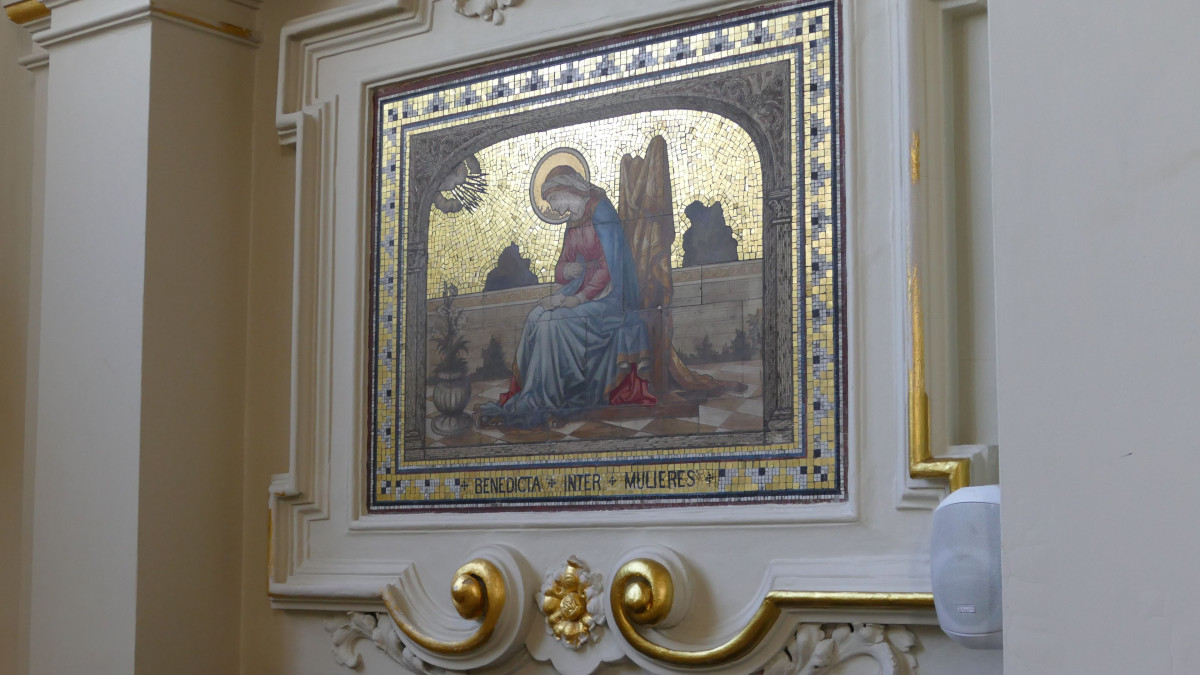
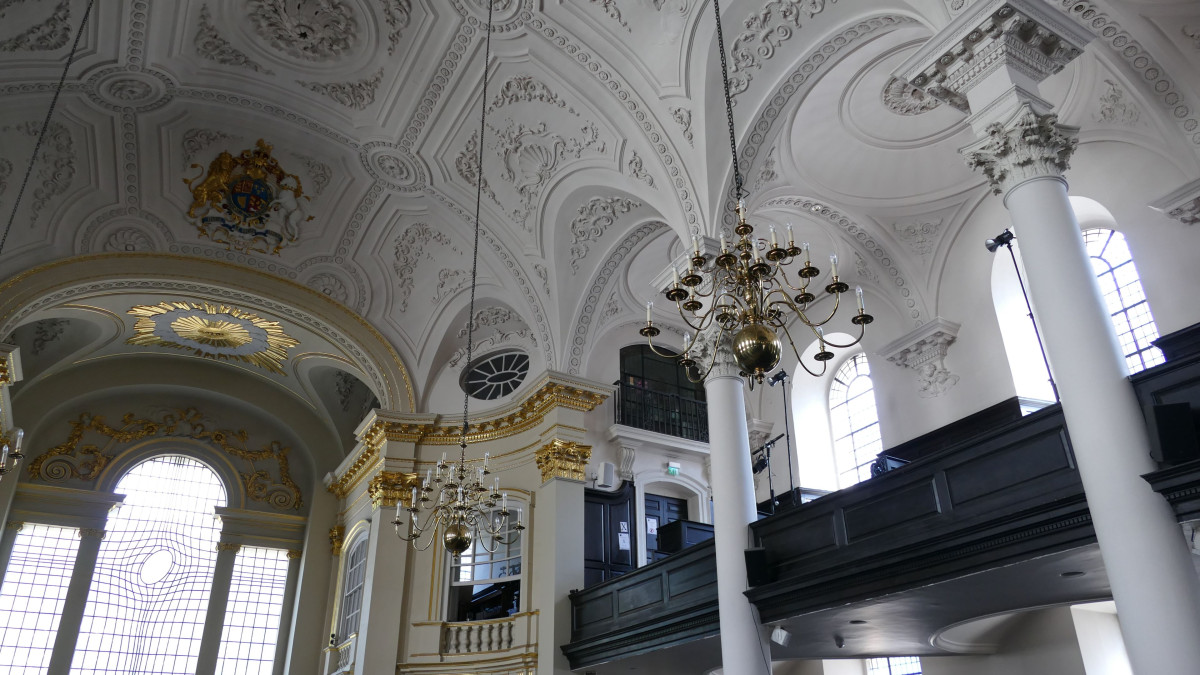
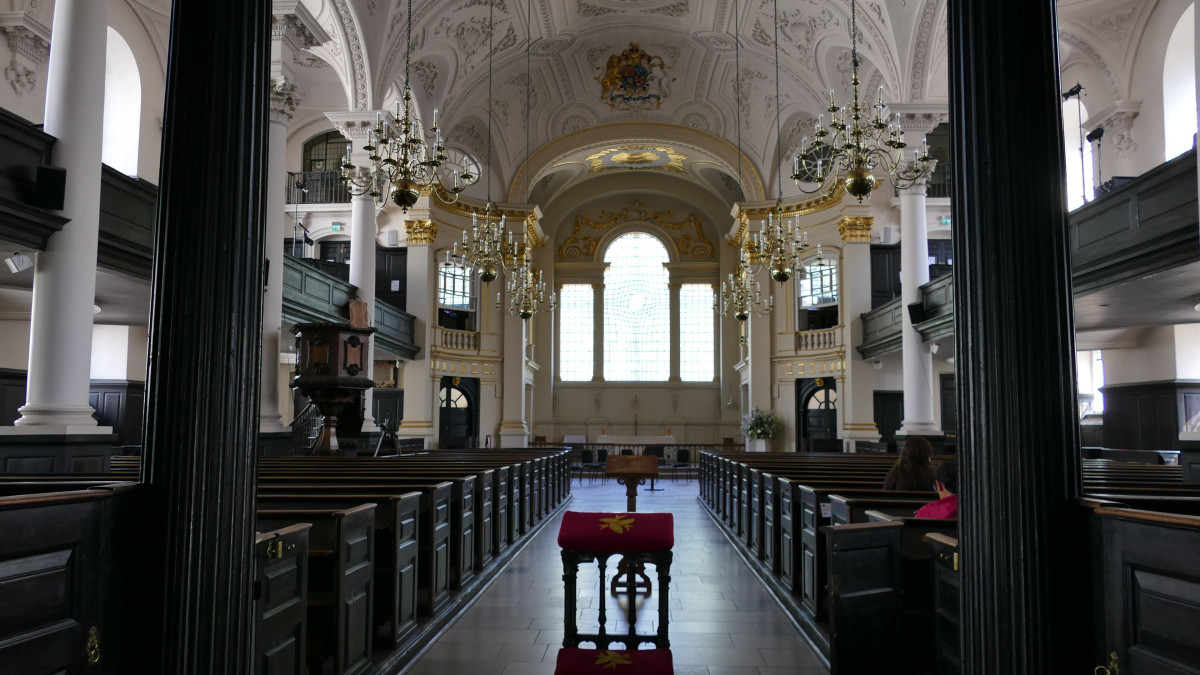
Inside, the atmosphere shifts from urban energy to measured calm. Light filters through tall windows, and the white interior carries both clarity and warmth. The church’s design encourages attention rather than overwhelming the eye. It feels open, ordered and welcoming, a place where a visitor can pause for five minutes or stay much longer without feeling out of place.
A church woven into London history
St Martin-in-the-Fields has long stood close to the currents of national life. Its location near royal, political and artistic institutions ensured that it was never merely a neighborhood church. Over generations it has witnessed coronations, wars, protests, celebrations and the daily theatre of the city. Yet its importance has not come only from proximity to power. What distinguishes St Martin’s is the way it has consistently turned outward, engaging the needs of the wider public rather than retreating behind ceremonial prestige.
This outward-facing identity helped shape its reputation as a church for all kinds of people. Londoners, office workers, tourists, artists, worshippers and those in urgent need have all crossed its threshold. That broad welcome is not incidental to its story; it is central to it. In a city often defined by speed and inequality, St Martin-in-the-Fields has become a symbol of what it means for an institution to remain rooted in generosity.
Music at the heart of its identity
If architecture gives St Martin’s its visual fame, music gives it much of its emotional resonance. The church is internationally celebrated for its concerts, choral tradition and recordings, and for many people it is one of the most memorable places in London to hear live classical performance. There is something especially moving about listening to music in a building where sound is not decoration but part of a living inheritance.
Concerts here often combine accessibility with excellence. Visitors who might feel intimidated by grander venues frequently discover that St Martin-in-the-Fields offers a more intimate encounter with classical music. Candlelit performances, sacred works, chamber concerts and seasonal programs all contribute to an atmosphere that is refined yet inviting. The experience is not simply about acoustics, though those are notable; it is about context. Music heard here seems connected to the city’s deeper rhythms, carrying a sense of continuity that outlasts any single performance.
For many Londoners, Christmas at St Martin’s holds particular magic. Carols and winter concerts transform the church into a place of shared memory, where tradition feels renewed rather than repeated. Even outside the festive season, however, the musical life of the church remains one of its strongest invitations.
The crypt and the life below ground
One of the most distinctive aspects of a visit is the crypt, a space that has been imaginatively reworked into an area for gathering, dining and reflection. The Cafe in The Crypt has become a destination in its own right, offering a memorable contrast to the noise above. To descend beneath the church and find conversation, light and hospitality is to understand something essential about St Martin’s character: it is a place that uses heritage not as a barrier, but as a framework for welcome.
The crypt also deepens the sense of historical continuity. Beneath the polished life of contemporary London lies layer upon layer of memory, and here that truth becomes tangible. Visitors can feel both the age of the site and the creativity with which it has been adapted for present use. Few landmarks in central London balance reverence and practicality so gracefully.
A legacy of service and compassion
Perhaps the most inspiring dimension of St Martin-in-the-Fields is its long commitment to social care, especially its work with people experiencing homelessness and vulnerability. This mission has shaped the church’s modern identity as surely as its architecture or music. In a district associated with tourism and national ceremony, St Martin’s insists on seeing the people who are easiest to overlook.
That ethical vision gives the building unusual moral force. It is not simply admired; it is trusted. Visitors sense that the church’s language of welcome is backed by action. This matters because many historic sites feel detached from present need. St Martin-in-the-Fields does the opposite, showing how an ancient institution can remain urgently relevant.
- Architecture: a defining work of English Baroque classicism
- Location: a prime position beside Trafalgar Square
- Music: world-renowned concerts and choral performances
- Atmosphere: calm, accessible and inclusive
- Mission: a respected tradition of social outreach
London is full of famous places, but only a few manage to feel both iconic and deeply humane. St Martin-in-the-Fields achieves that rare balance. It offers beauty without stiffness, history without dust, and spirituality without exclusion. Whether you come to admire Gibbs’s architecture, attend a lunchtime concert, pause after visiting the National Gallery or simply take shelter from the pace of the city, the church meets you with the same quiet generosity.
Its enduring appeal lies in this layered experience. St Martin’s is not a monument to be checked off a list; it is a place to enter, listen and absorb. In the middle of one of the busiest parts of London, it creates room for thought. That may be its greatest gift. It reminds us that a city’s most memorable landmarks are not only those that impress the eye, but those that enlarge the spirit.
For travelers seeking a meaningful stop in central London, St Martin-in-the-Fields is more than worth the visit. It captures something essential about the capital at its best: cultured, resilient, open and unexpectedly intimate. Long after the square’s crowds have blurred into memory, the impression of this church often remains clear—a still point in the city, and a beautiful invitation to look more closely at London itself.
St Martin-in-the-Fields