Wellington Arch
Discover Wellington Arch in London: its royal history, rooftop views, wartime story, and why this landmark rewards a closer look.
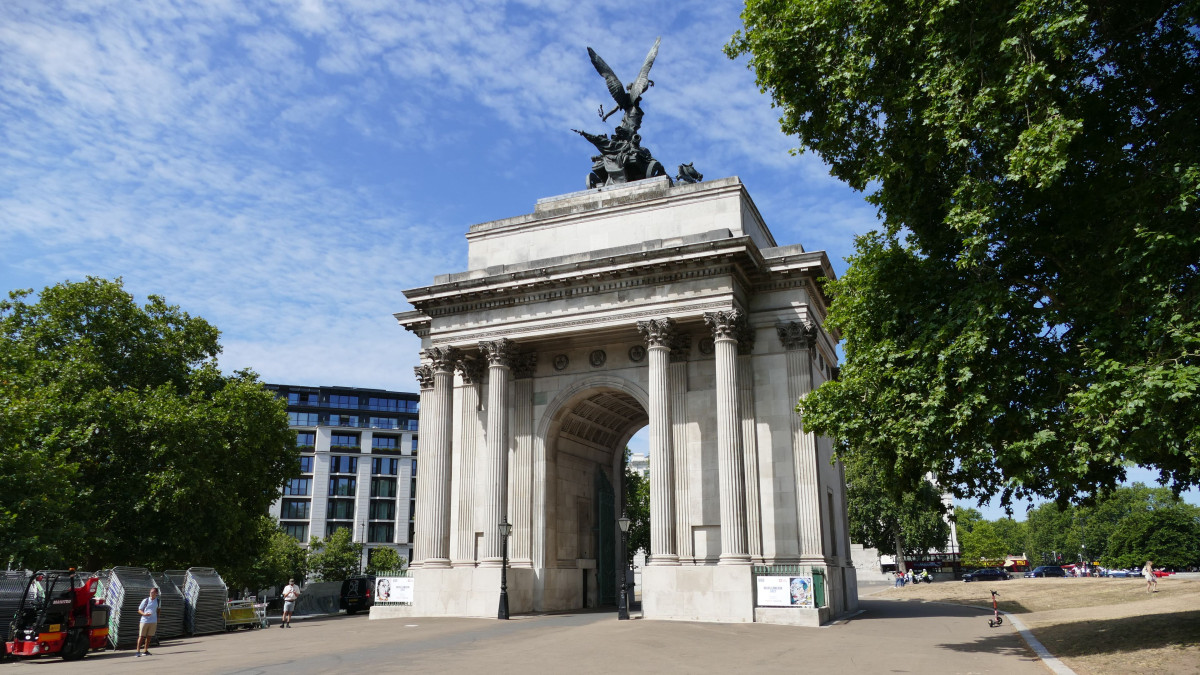
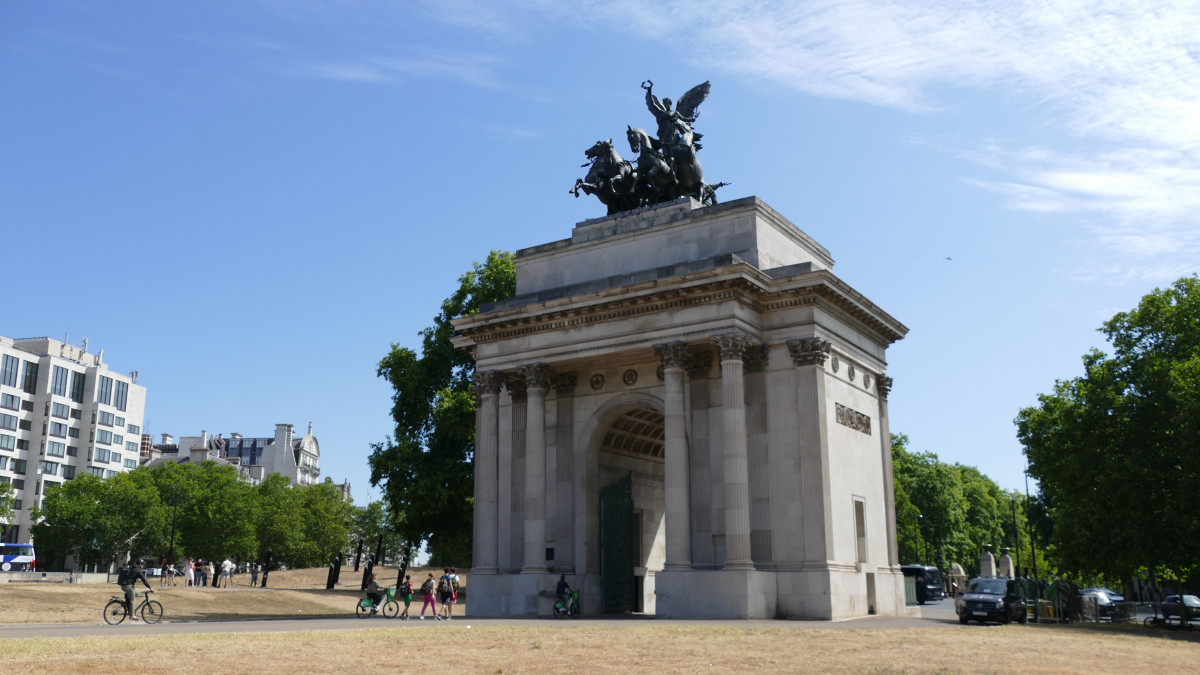
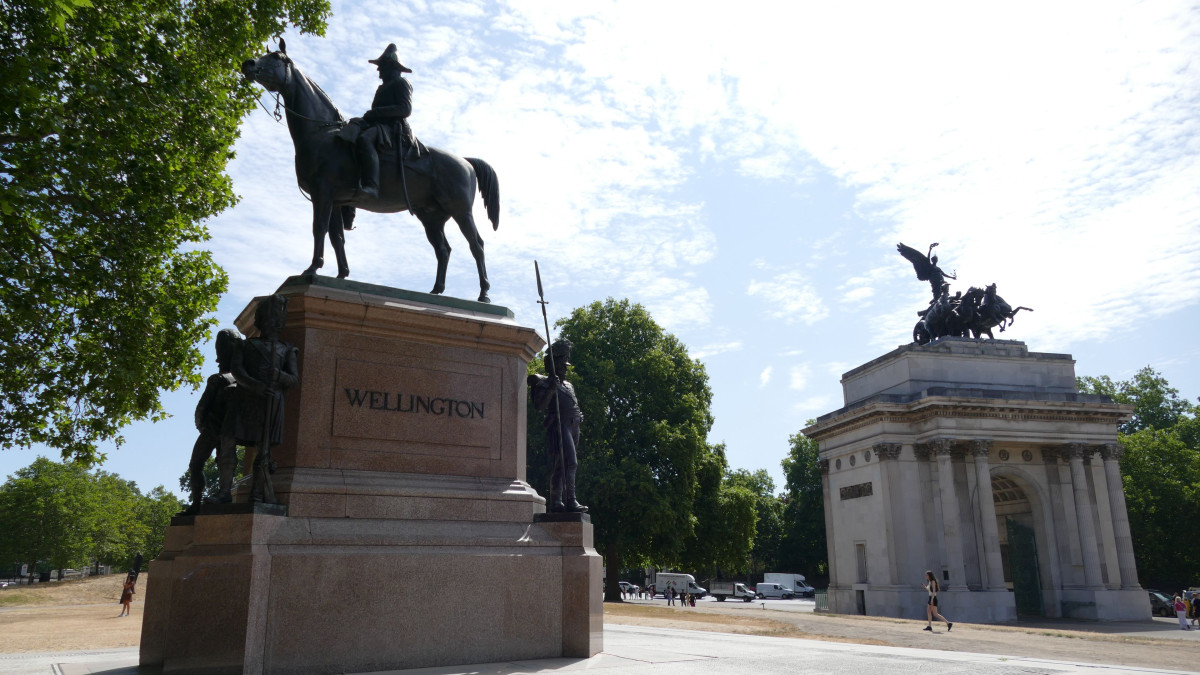
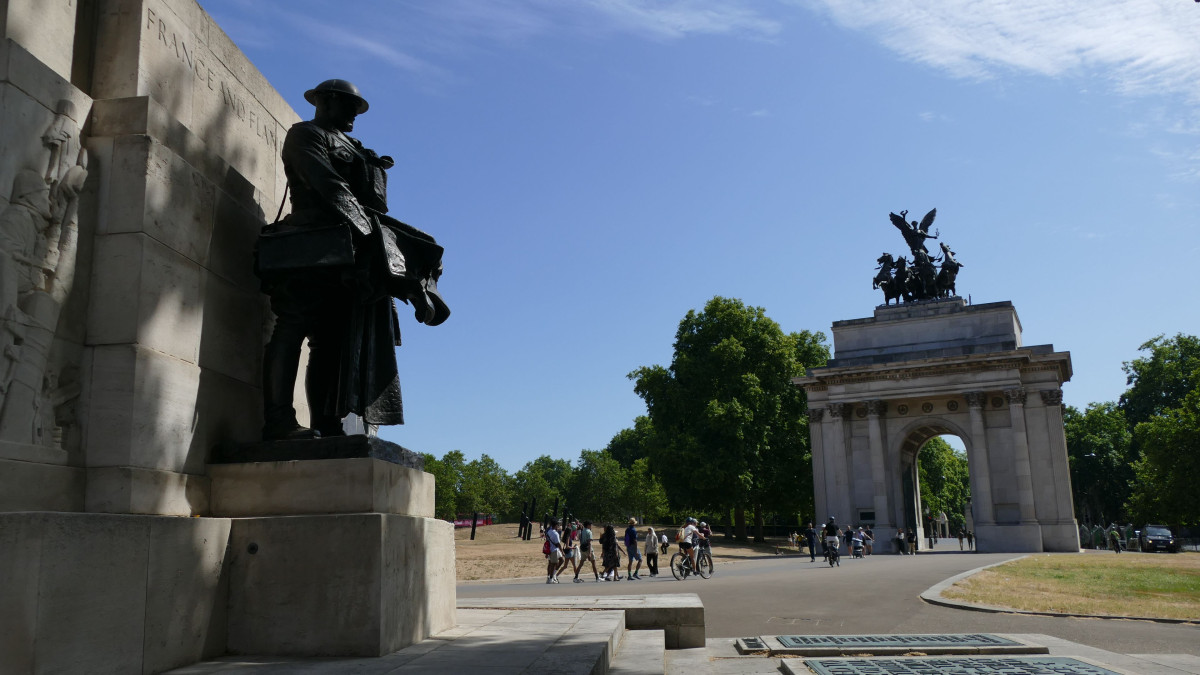
Standing at the edge of Hyde Park, Wellington Arch is one of those London landmarks that many people pass without fully discovering. Traffic circles around it, grand processions move nearby, and famous attractions compete for attention in every direction. Yet this monumental arch offers something rare in the capital: a place where architecture, military history, royal ceremony, and sweeping city views come together in a single, memorable experience. For visitors willing to pause, Wellington Arch reveals a quieter, more reflective side of London’s grandeur.
Built in the early 19th century, the arch was originally designed by Decimus Burton as part of a wider transformation of the area around Buckingham Palace and the western approach to central London. It was intended to commemorate Britain’s victories in the Napoleonic Wars, a period that reshaped Europe and elevated the Duke of Wellington into national legend. Unlike many monuments that merely decorate a city, Wellington Arch was created to express confidence, triumph, and national identity. Even today, its powerful proportions and commanding position make it feel less like a backdrop and more like a statement.
Its story, however, is not one of static perfection. Wellington Arch has been altered, moved, and reinterpreted over time, which makes it especially fascinating. Originally placed a little differently at Hyde Park Corner, it was later relocated during road improvements in the late 19th century. That shift changed the way the monument related to the surrounding city, but it also ensured its survival in a fast-modernizing London. The arch that stands today is therefore not only a relic of imperial ambition but also a symbol of the city’s ability to adapt without entirely surrendering its past.
One of the most striking features of Wellington Arch is the dramatic bronze sculpture that crowns it. The Quadriga, depicting the Angel of Peace descending on the Chariot of War, is the largest bronze sculpture in Europe of its kind. It gives the monument a sense of movement and theatrical energy, as though the stone base is not merely supporting history but launching it skyward. Seen against a changing London sky, the sculpture transforms from imposing to almost poetic, especially in early morning light or at sunset. It is this combination of weight and lift, victory and restraint, that gives the arch much of its emotional power.
A monument with a human story
Although Wellington Arch celebrates national achievement, it also tells a more intimate story about how Britain remembers conflict. Inside, exhibitions managed by English Heritage explore the monument’s connection to the Duke of Wellington, the Napoleonic Wars, and the ceremonial life of London. Visitors often expect only a quick look at a historic interior, but the displays add depth and context, helping the building feel alive rather than purely symbolic. The rooms are not vast, yet they are thoughtfully presented, allowing the arch to function as both memorial and museum.
Its wartime chapter is especially compelling. During the Second World War, the arch was used as a lookout post and became part of London’s defensive awareness during the Blitz. That practical role adds another layer to its identity. A monument built to celebrate victory in one era became useful again in another moment of national uncertainty. This continuity between ceremony and service is part of what makes Wellington Arch so moving. It has not simply witnessed history; in subtle ways, it has participated in it.
The location deepens that sense of connection. Just across the road stands Apsley House, the former home of the Duke of Wellington, while nearby lie Green Park, Buckingham Palace, and the ceremonial routes used for state occasions. Few places in London gather so many strands of national life into such a compact area. From Wellington Arch, you can feel how monarchy, military memory, urban planning, and public spectacle intersect. It is a reminder that London’s landmarks are rarely isolated objects; they belong to a larger civic drama.
Why the view matters
Perhaps the most underrated reason to visit Wellington Arch is the viewpoint near the top. In a city filled with observation decks and towers, this elevated platform offers something more intimate and historically textured. Instead of looking down from a dizzying height, you stand at a level that still feels connected to the streets, the parks, and the architecture around you. The result is a perspective that is both panoramic and personal.
From here, visitors can appreciate the elegant sweep of Constitution Hill, the greenery of Hyde Park, and the movement of one of London’s busiest ceremonial and traffic junctions. You begin to understand the arch not just as an object to photograph, but as a carefully positioned marker in the cityscape. The view also reveals how London balances monumentality with livability. Royal routes, memorials, trees, and modern motion all coexist in a scene that feels unmistakably British.
- Best for history lovers: Rich interpretation of the Napoleonic era and the Duke of Wellington.
- Best for photographers: Distinctive rooftop views and dramatic exterior sculpture.
- Best for first-time visitors: Easy to combine with Buckingham Palace, Green Park, and Apsley House.
Because the site is smaller than some headline attractions, it often feels manageable and rewarding rather than overwhelming. You can visit in under an hour, but the impression lasts much longer. That makes Wellington Arch ideal for travelers who want depth without exhaustion, and for Londoners seeking a fresh angle on familiar surroundings.
How to make the most of a visit
- To appreciate Wellington Arch fully, approach it slowly. Walk around the exterior first and take in the relationship between the arch, the roads, and the neighboring buildings. Notice how the sculpture changes from different angles. Then step inside and let the exhibitions provide historical grounding before heading upward to the viewing platform. This sequence allows the monument to unfold naturally, from public symbol to personal experience.
- Arrive via Hyde Park Corner Underground station for the most direct access.
- Pair the visit with Apsley House to deepen the Wellington connection.
- Choose a clear day for the best rooftop views and photographs.
- Allow time for a walk through Green Park or along Constitution Hill afterward.
There is also something inspiring about visiting during quieter hours, when the crowds thin and the monument feels almost contemplative. In those moments, Wellington Arch becomes more than a stop on a sightseeing itinerary. It becomes a place to think about endurance, memory, and the way cities carry their past forward. London excels at spectacle, but here it also offers perspective.
Wellington Arch may not always dominate lists of must-see attractions, and that is precisely part of its charm. It rewards curiosity over checklist tourism. It invites visitors to look beyond the obvious and discover how meaning accumulates in stone, bronze, and setting. In a city famous for reinvention, the arch stands as proof that heritage can remain dynamic, relevant, and emotionally resonant.
For anyone exploring London with an eye for beauty and significance, Wellington Arch deserves a place on the itinerary. It is a monument to victory, a witness to change, a keeper of stories, and a balcony over one of the capital’s most historic crossroads. Spend even a short time here, and you may leave with a renewed sense of how powerfully a single landmark can reflect the spirit of a city.
Wellington Arch