The National Gallery
Discover the National Gallery in London, where iconic paintings and centuries of European art inspire every visitor. Free admission.

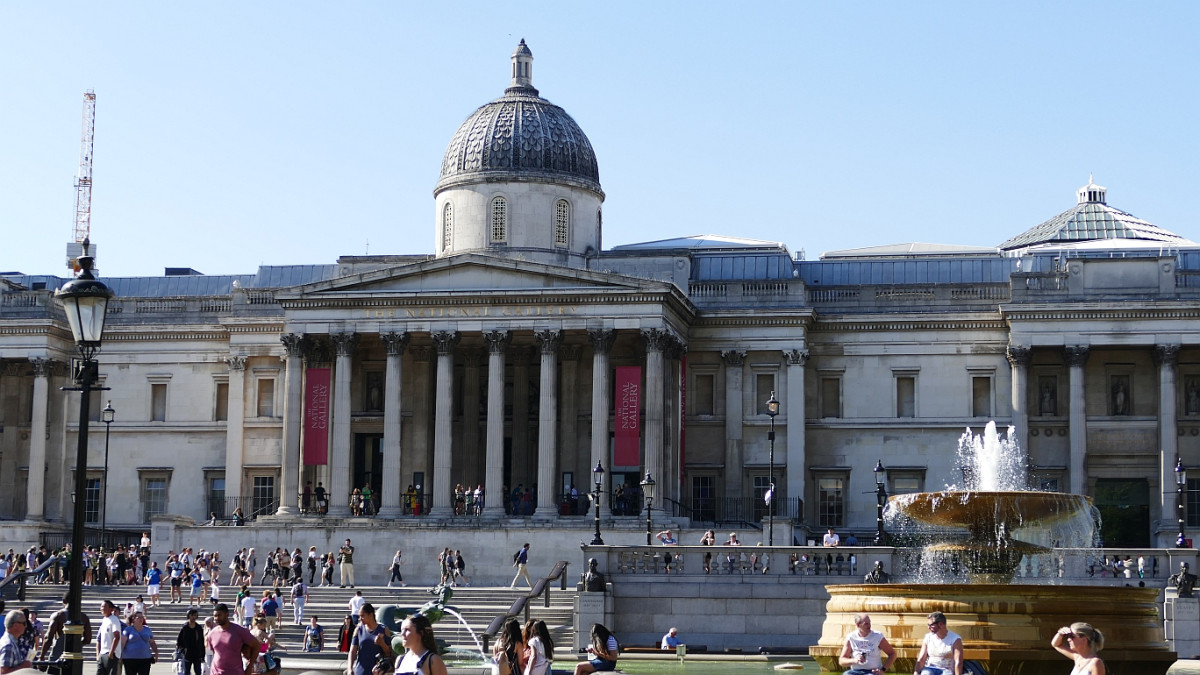
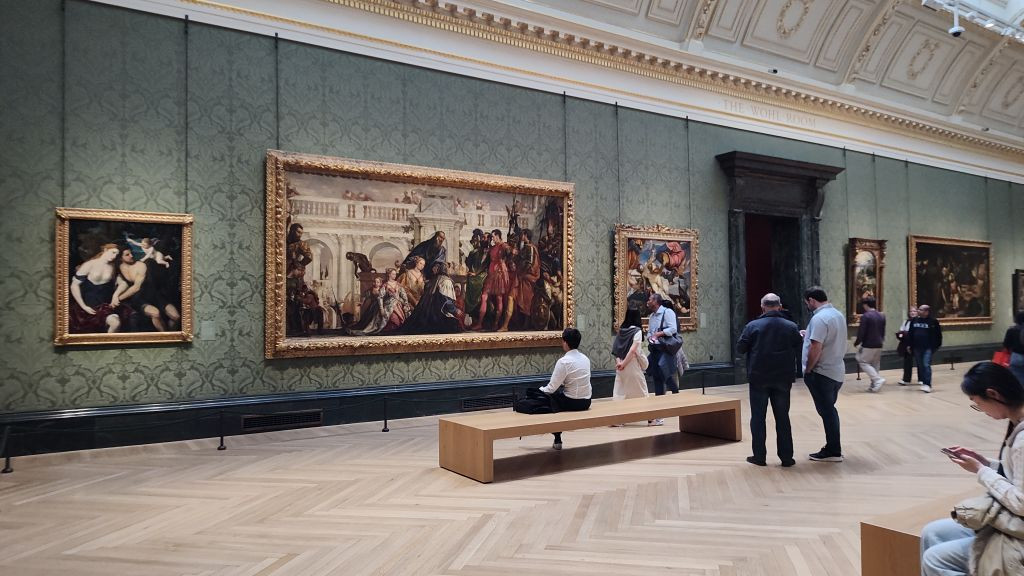
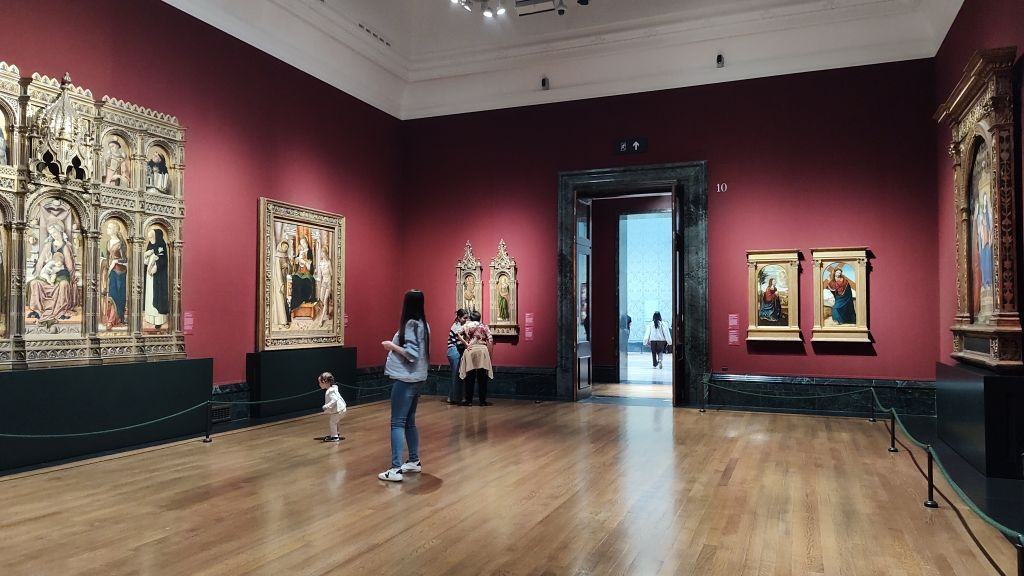

Standing proudly on Trafalgar Square, the National Gallery is one of London’s most rewarding cultural experiences, a place where centuries of European imagination unfold room by room. More than a museum, it is a meeting point between daily city life and timeless beauty. Commuters, first-time visitors, art students, and seasoned travelers all pass through its doors to encounter paintings that have shaped the way the world sees light, faith, power, nature, and humanity itself. With free admission to its permanent collection, the gallery offers something increasingly rare: direct access to greatness, open to everyone.
Founded in 1824, the National Gallery was created with a democratic vision. Rather than building a royal collection hidden behind palace walls, Britain established a public institution where masterpieces could be studied and enjoyed by all. That founding idea still defines the atmosphere today. The gallery’s collection spans the mid-13th century to the early 20th century, tracing the evolution of European painting through more than 2,300 works. Within a single visit, you can move from the gold backgrounds of medieval altarpieces to the emotional intensity of the Renaissance, from the drama of the Baroque to the shimmering experiments of Impressionism.
A journey through Europe’s artistic history
One of the gallery’s greatest strengths is the clarity of its collection. Rather than overwhelming visitors with endless objects, it presents a focused story of painting at its highest level. Here, names that often appear in textbooks become immediate and human: Giotto, Jan van Eyck, Leonardo da Vinci, Raphael, Titian, Caravaggio, Rembrandt, Velazquez, Turner, Constable, Monet, Van Gogh, and Cezanne. Each room feels like a chapter in a larger narrative, revealing how artists responded to religion, politics, science, landscape, and the changing idea of the individual.
The Renaissance galleries are especially compelling. In these rooms, viewers can sense Europe awakening to new possibilities in perspective, anatomy, and realism. Paintings by Leonardo and Raphael reveal a refined balance between intellect and emotion, while works by Titian pulse with color and confidence. Moving onward, the Baroque masters intensify the experience. Caravaggio’s dramatic contrasts of light and shadow bring sacred and everyday scenes into startling proximity, while Rubens and Rembrandt demonstrate how paint itself can become movement, flesh, and feeling.
Works by -
Johannes Vermeer , Titian , Paul Cézanne , Georges Seurat , Claude Monet , Giovanni Bellini , Anthony van Dyck , François-Hubert Drouais , Jean-Auguste-Dominique Ingres , Thomas Gainsborough , Peter Paul Rubens , Rembrandt , Vincent van Gogh , Jan Gossaert (Jean Gossart) , Hans Holbein the Younger , Jan van Eyck , Piero della Francesca , Paolo Uccello , Michelangelo , Joseph Mallord William Turner , John Constable , Raphael , Canaletto , Michelangelo Merisi da Caravaggio , Diego Velázquez , Leonardo da Vinci , Sandro Botticelli , George Stubbs
The National Gallery is equally celebrated for its later works. British landscapes by Turner and Constable transform weather and countryside into emotional events, while the French collection opens onto the luminous world of the 19th century. Monet’s atmosphere, Renoir’s softness, and Van Gogh’s restless energy remind visitors that art history is not a distant academic subject but a living record of how people have tried to capture experience. To stand before these canvases is to feel both the fragility and the resilience of human creativity.
Highlights that stay with you
Every visitor will leave with different favorites, yet certain works have an almost magnetic pull. Van Eyck’s The Arnolfini Portrait remains one of the most discussed paintings in Europe, admired for its astonishing detail and mysterious symbolism. Leonardo da Vinci’s The Virgin of the Rocks draws viewers into a shadowed, dreamlike landscape where spirituality seems to emerge from nature itself. Turner’s paintings, filled with atmosphere and motion, feel remarkably modern, while Van Gogh’s Sunflowers continues to radiate warmth, vulnerability, and intensity.
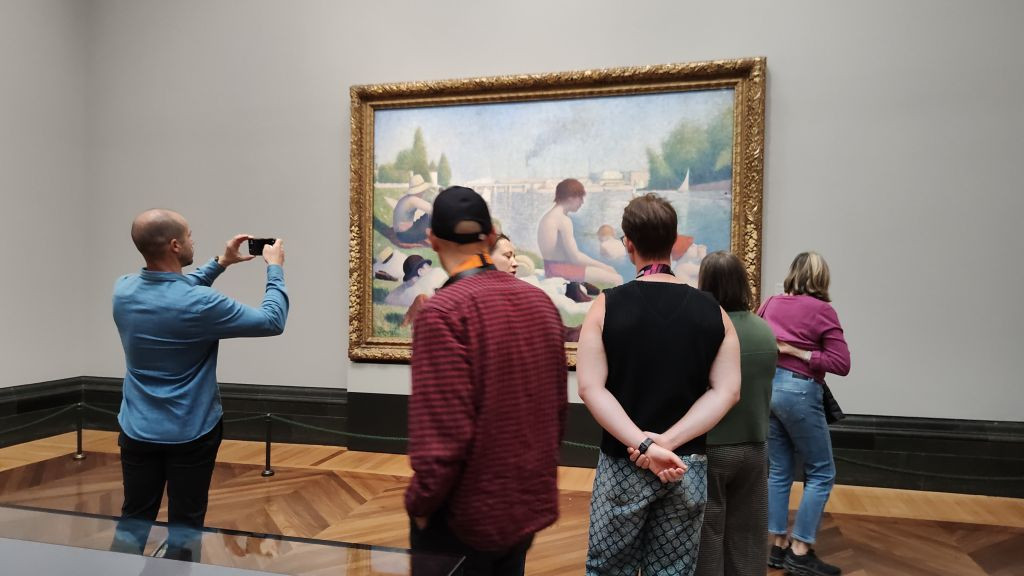
What makes these encounters memorable is not only fame but proximity. At the National Gallery, visitors often find themselves surprisingly close to works they have known for years through books, posters, or screens. The real paintings reveal subtleties that reproduction cannot carry: the thickness of a brushstroke, the glow beneath a layer of glaze, the scale of a face, the silence of a background. These details create a powerful reminder that great art is physical as well as intellectual.
Why the experience feels so accessible
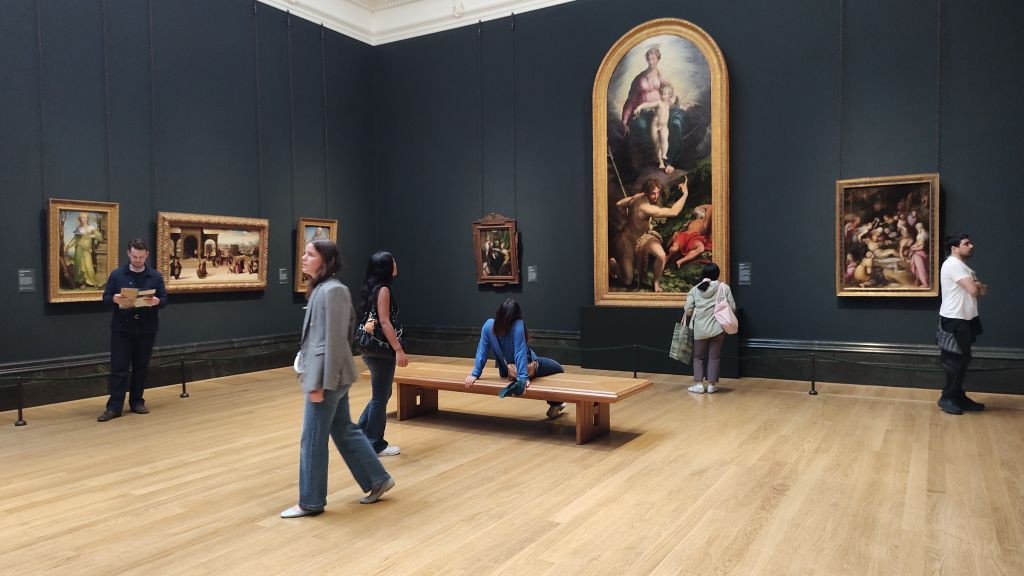
Despite the international importance of its collection, the National Gallery remains welcoming rather than intimidating. Its central location makes it easy to include in any London itinerary, whether as a full-day destination or a thoughtful pause between walks through Westminster, Covent Garden, or the West End. The layout encourages both structured exploration and spontaneous discovery. You can follow a chronological path, seek out famous masterpieces, or simply wander until a room captures your attention.
The gallery also excels at interpretation. Clear labels, audio guides, talks, and temporary exhibitions help visitors engage at different levels, whether they are new to art or deeply knowledgeable. Families appreciate the sense of openness, while solo travelers often find it a perfect place for quiet reflection. There is no single correct way to experience the collection. Some people move quickly from icon to icon; others spend twenty minutes with one painting. Both approaches feel valid here.
- Free permanent collection entry makes world-class art available to all.
- Central Trafalgar Square location allows easy access by foot, bus, and Underground.
- Exceptional range covers key movements in European painting.
- Visitor-friendly resources support both casual and in-depth exploration.
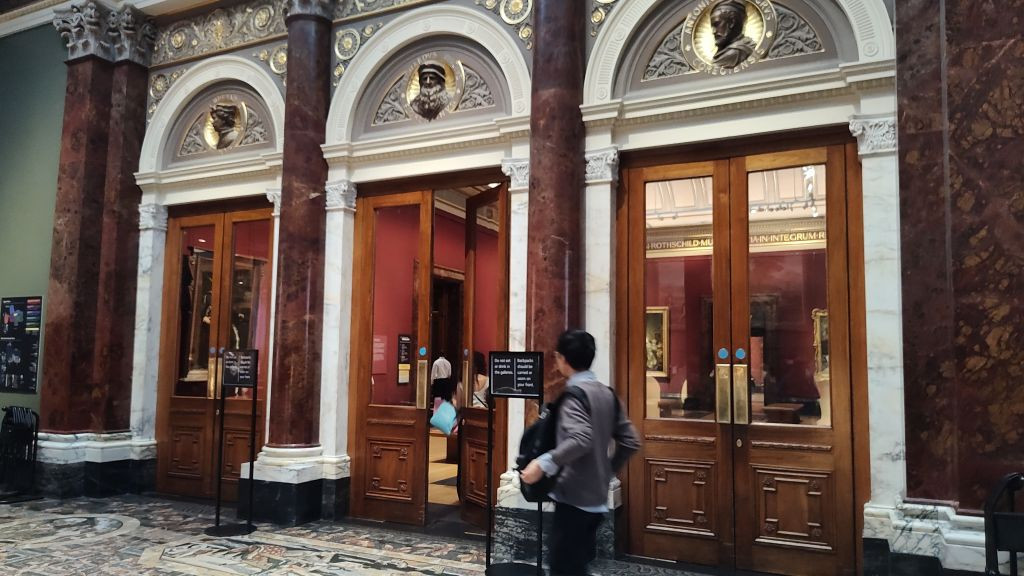
The building itself contributes to the experience. Its grand facade anchors one of London’s most recognizable public spaces, yet inside, the mood shifts from urban energy to contemplative calm. Natural light, elegant galleries, and carefully arranged rooms create a rhythm that suits close looking. There is grandeur, certainly, but also intimacy. A visitor can move from a bustling entrance hall into a quiet room where a single painting commands full attention.
That contrast is part of the gallery’s magic. Outside, London surges forward with traffic, demonstrations, celebrations, and constant motion. Inside, time slows. A face painted five hundred years ago can suddenly feel present. A landscape from another country and another century can reflect an emotion you recognize immediately. The National Gallery offers not escape from the city but a deeper way of being in it, reminding us that public life is enriched by places devoted to memory, beauty, and thought.
For practical travelers, the gallery rewards planning but does not demand it. Early mornings and weekday visits can feel calmer, while repeat visits are often more satisfying than trying to see everything at once. Temporary exhibitions may require tickets, but the permanent collection alone can fill hours with genuine wonder. Nearby cafes, bookshops, and landmarks make it easy to shape the visit into a broader day in central London.
Ultimately, the National Gallery endures because it combines excellence with openness. It preserves some of Europe’s greatest paintings without turning them into distant relics. Instead, it invites conversation across centuries, asking each visitor to look closely and feel deeply. In a city famous for spectacle, this gallery offers something quieter and more lasting: the chance to stand before extraordinary works and remember how profoundly art can enlarge our sense of the world. For anyone seeking inspiration in London, few places speak with such clarity, generosity, and grace.
Free entry
The National Gallery
Entrance via Sainsbury Wing