Tower of London
Discover the Tower of London’s royal history, Crown Jewels, famous prisoners, and enduring legends in this inspiring guide.


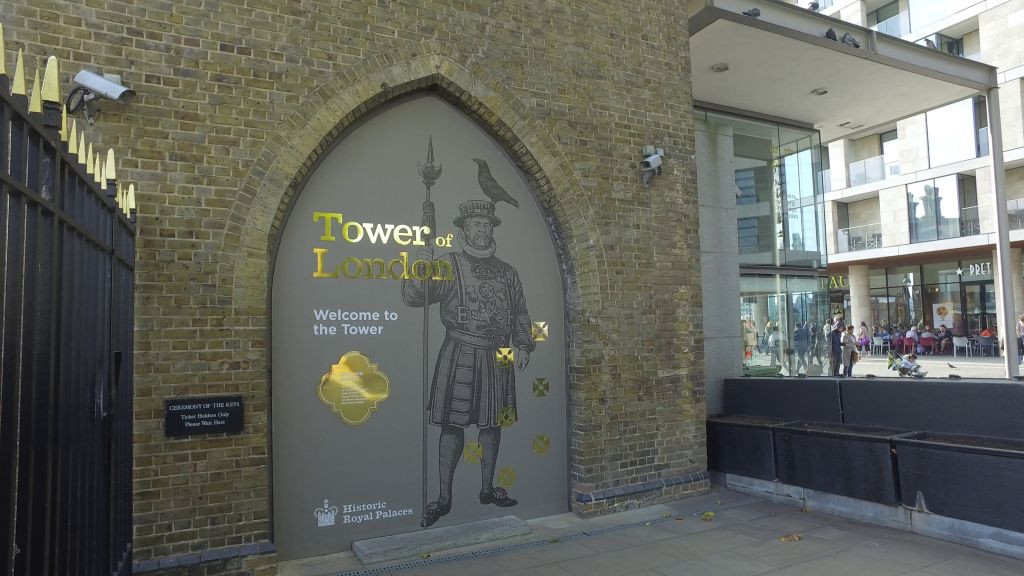
Rising beside the River Thames, the Tower of London is far more than an ancient fortress. It is a living chronicle of ambition, survival, ceremony, and transformation at the heart of England’s story. For nearly a thousand years, its stone walls have witnessed coronations and conspiracies, royal splendor and human suffering, national triumphs and private tragedies. To stand before it today is to encounter a place where history does not feel distant. It feels immediate, powerful, and deeply human.
Founded by William the Conqueror in the aftermath of 1066, the Tower began as a bold declaration of authority. The Norman king needed more than a military stronghold; he needed a symbol that would command respect and secure control over a restless city. The White Tower, still the fortress’s most recognizable core, was designed to do exactly that. Massive, imposing, and unlike anything many Londoners had seen before, it announced a new political era in stone. Yet even in its earliest form, the Tower was never only defensive. It was also royal, administrative, and ceremonial, reflecting the many layers of power concentrated within its walls.
Over the centuries, successive monarchs expanded the complex into a formidable ring of walls, towers, gates, and moats. What emerged was not a single building but a fortified world of its own. Kings and queens used it as a residence, especially in uncertain times. Armories and treasuries operated within its boundaries. Records were stored there, and the nation’s wealth and symbols of sovereignty were guarded behind its barriers. The Tower evolved with the kingdom itself, adapting to changing political needs while preserving its aura of control.
A fortress of power and fear
The Tower of London is perhaps most famous for its role as a prison, though this reputation tells only part of its story. Not everyone confined there was a common criminal. Many prisoners were people of rank, influence, or danger to the Crown. Some entered through the Traitors’ Gate, their arrival marked by dread and uncertainty as they passed from the river into royal custody. Within the Tower, fate could shift quickly. A nobleman might be treated with relative comfort, while another prisoner faced interrogation, despair, or execution.
The names associated with the Tower read like a dramatic roll call of British history. Anne Boleyn, the second wife of Henry VIII, was imprisoned there before her execution in 1536, a moment that still casts a long emotional shadow over the site. Lady Jane Grey, the tragic “Nine Days’ Queen,” also met her end within its walls. Sir Walter Raleigh spent years imprisoned there and used his confinement for writing and study, proving that even in captivity the human spirit can remain unbroken. These stories continue to resonate because they reveal the Tower not merely as a monument, but as a stage on which personal courage and political ruthlessness collided.
Yet fear alone does not define the place. The Tower also reminds visitors how institutions endure by changing meaning over time. A structure once associated with intimidation now invites reflection, education, and remembrance. Its ability to hold both darkness and dignity is part of what makes it so compelling.
The Crown Jewels and the language of monarchy
Among the Tower’s greatest treasures are the Crown Jewels, a collection that embodies the pageantry and continuity of the British monarchy. These objects are not simply lavish ornaments. They are ceremonial instruments that connect the present to centuries of ritual. Crowns, scepters, orbs, swords, and sacred vessels each carry symbolic weight, expressing authority, duty, faith, and national identity.
For many visitors, seeing the Crown Jewels is a defining moment. Their brilliance is unmistakable, but their deeper power lies in what they represent: the survival of tradition through war, upheaval, reform, and modern change. The current collection largely dates from the Restoration period, after earlier regalia were destroyed during the English Civil War. That rebirth is significant. It shows how nations, like people, can rebuild what has been broken and invest old symbols with renewed meaning.
The experience of viewing the jewels often inspires more than admiration. It invites contemplation of how history is preserved, performed, and passed on. In a fast-moving world, the Crown Jewels stand as reminders that continuity can itself be a source of strength.
Yeoman Warders, ravens, and enduring legend
No account of the Tower would be complete without its famous traditions. The Yeoman Warders, often called Beefeaters, are among its most recognizable guardians. Dressed in distinctive uniform and rich in knowledge, they connect formal history with storytelling, bringing the past to life through wit, ceremony, and lived custodianship. Their presence reinforces the idea that heritage is not static. It depends on people who interpret it, protect it, and share it with new generations.
Then there are the ravens, perhaps the Tower’s most beloved residents. Legend holds that if the ravens ever leave, the kingdom and the Tower will fall. Whether taken as myth, charm, or national folklore, the story has become inseparable from the site’s identity. It adds a note of wonder to a place already dense with memory, reminding us that history is shaped not only by documents and dates but also by the tales people choose to keep alive.
- White Tower: the Norman heart of the fortress and a masterpiece of medieval power.
- Traitors’ Gate: the river entrance forever linked with high-profile prisoners.
- Crown Jewels: priceless regalia still used in royal ceremony.
- Yeoman Warders: ceremonial guardians and expert interpreters of the site.
- Ravens: legendary symbols woven into the Tower’s enduring mystique.
The Tower of London remains one of the city’s most essential landmarks because it speaks to universal themes: authority, resilience, memory, justice, and reinvention. It is a UNESCO World Heritage Site, but its significance extends beyond official recognition. It offers a rare chance to engage with nearly a millennium of history in one place, where architecture, objects, and stories converge with extraordinary force.
Modern visitors often arrive expecting a famous attraction and leave with something more meaningful: a sense of perspective. The Tower reveals how fragile power can be, how enduring symbols are created, and how places marked by conflict can become spaces of learning. It encourages us to look closely at the past, not to glorify it uncritically, but to understand the people who shaped it and the consequences of their choices.
- For travelers exploring London, the Tower is not simply a stop on an itinerary. It is an encounter with the dramatic heartbeat of the nation. Every stone seems to carry a voice, every courtyard a memory. In that way, the Tower of London continues to do what it has always done best: command attention. But now, instead of demanding obedience, it inspires curiosity, reflection, and awe. Its walls no longer divide rulers from subjects. They connect the present with the vast, complicated, and unforgettable story of the past.
- Arrive early to enjoy quieter views of the fortress and exhibits.
- Allow time for both the Crown Jewels and the White Tower.
- Join a Yeoman Warder tour for vivid historical insight.
- Pause in the courtyards to absorb the atmosphere beyond the main displays.
In a city celebrated for constant renewal, the Tower of London stands as proof that the oldest places can still feel the most alive. It endures not because it belongs only to history, but because it continues to speak to the imagination.
Tower of London
St Katharine's & Wapping, London EC3N 4AB
Getting to Tower of London
The Tower of London can be easily accessed by public transport.
Most hop on hop off tour buses also stop at the Tower.
- Tube: The closest tube station is Tower Hill (Circle and District lines)
- Bus: 15, 42, 78, 100, and RV1
- Overground: The closest stations are Fenchurch Street and London Bridge
- Riverboat: The closest river access point is Tower Pier
The Tower is located within easy walking distance of several London Underground and national train stations including:
- 5 mins from Tower Hill Underground station – served by the District and Circle lines and step free access to street level.
- 10-15 mins from Monument, Bank, Aldgate, Aldgate East London Underground stations
- 10-15 mins from London Bridge and Fenchurch Street stations
- 20 min from Liverpool Street station
- 25 mins from London Charing Cross station
Opening Times
The Tower of London is open daily except between 24th-26th December and 1st January.
- Summer (1st March - 31st October):
- Tuesday-Saturday: 9 AM - 5:30 PM
- Sunday-Monday: 10 AM - 5:30 PM
- Last admission: 5 PM
- Winter (1st November - 28th February):
- Tuesday-Saturday: 9 AM - 4:30 PM
- Sunday-Monday: 10 AM - 4:30 PM
- Last admission: 4 PM